Build a Modern Learning Organization
Accelerate learning and scale expertise with Synthesis,
our integrated knowledge, learning, and AI platform
for AEC firms.
KNOWLEDGE AGENTS | AI SEARCH | INTRANET | LMS
Over 170 AEC firms run Synthesis. Find out why.

Put Your Knowledge to Work
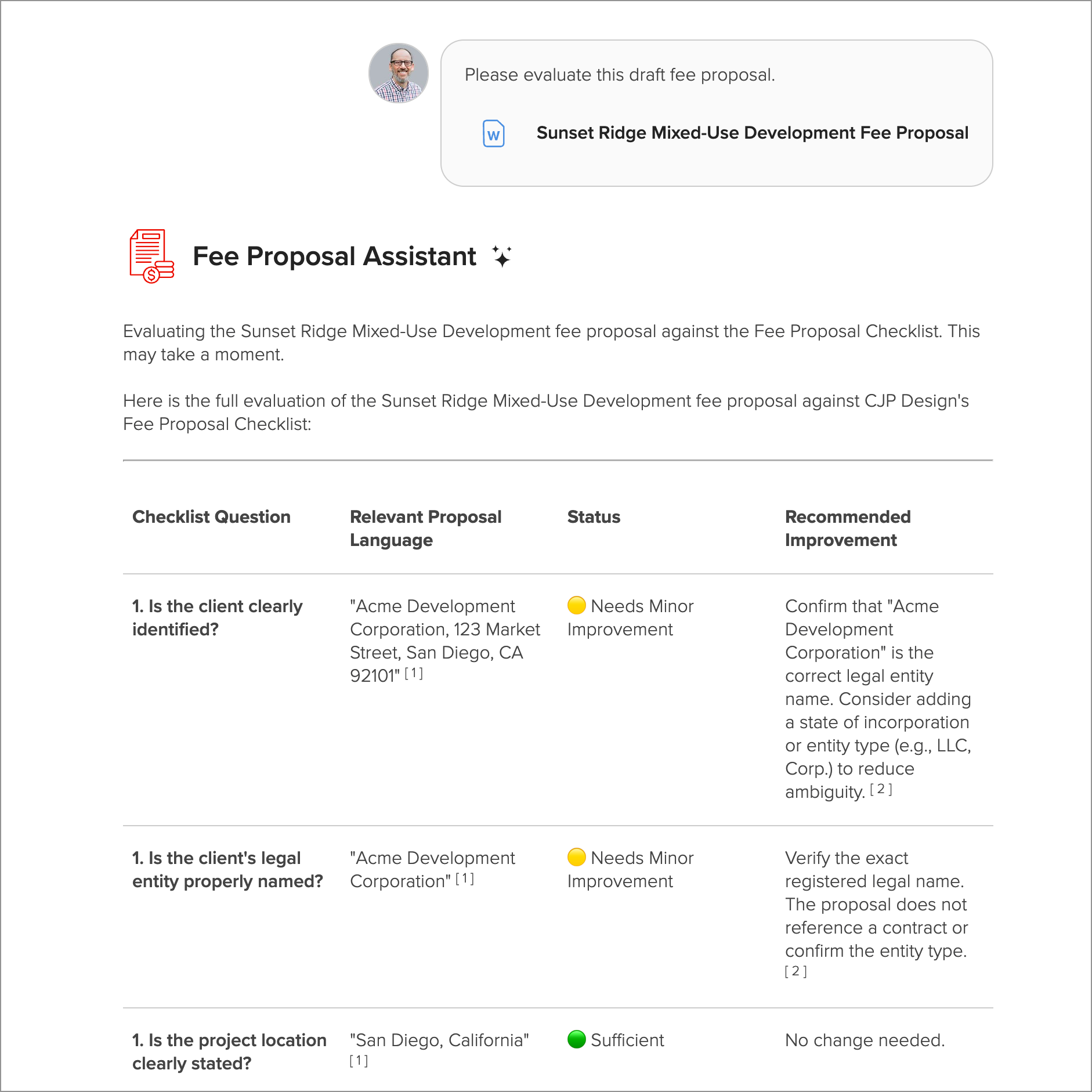
Synthesis Knowledge Agents help AEC firms accelerate learning, scale expertise, and streamline workflows using AI grounded in institutional knowledge and best practices.
AI Search for AEC Firms
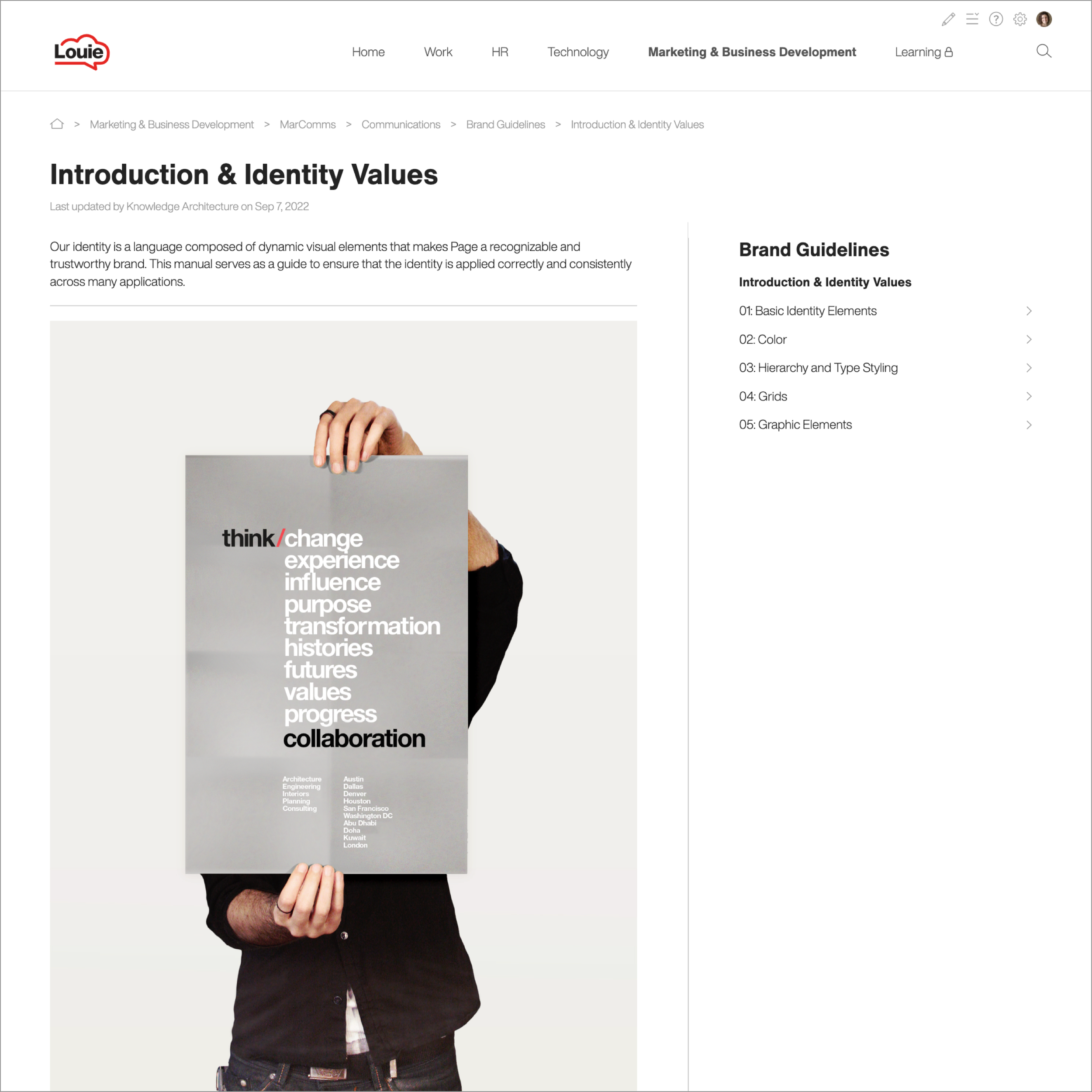
Synthesis AI Search combines next generation search technology with AI to instantly generate rich answers to natural language searches and questions by summarizing the most relevant content on your Synthesis intranet.
Build a Central Hub for Firmwide Knowledge + Information
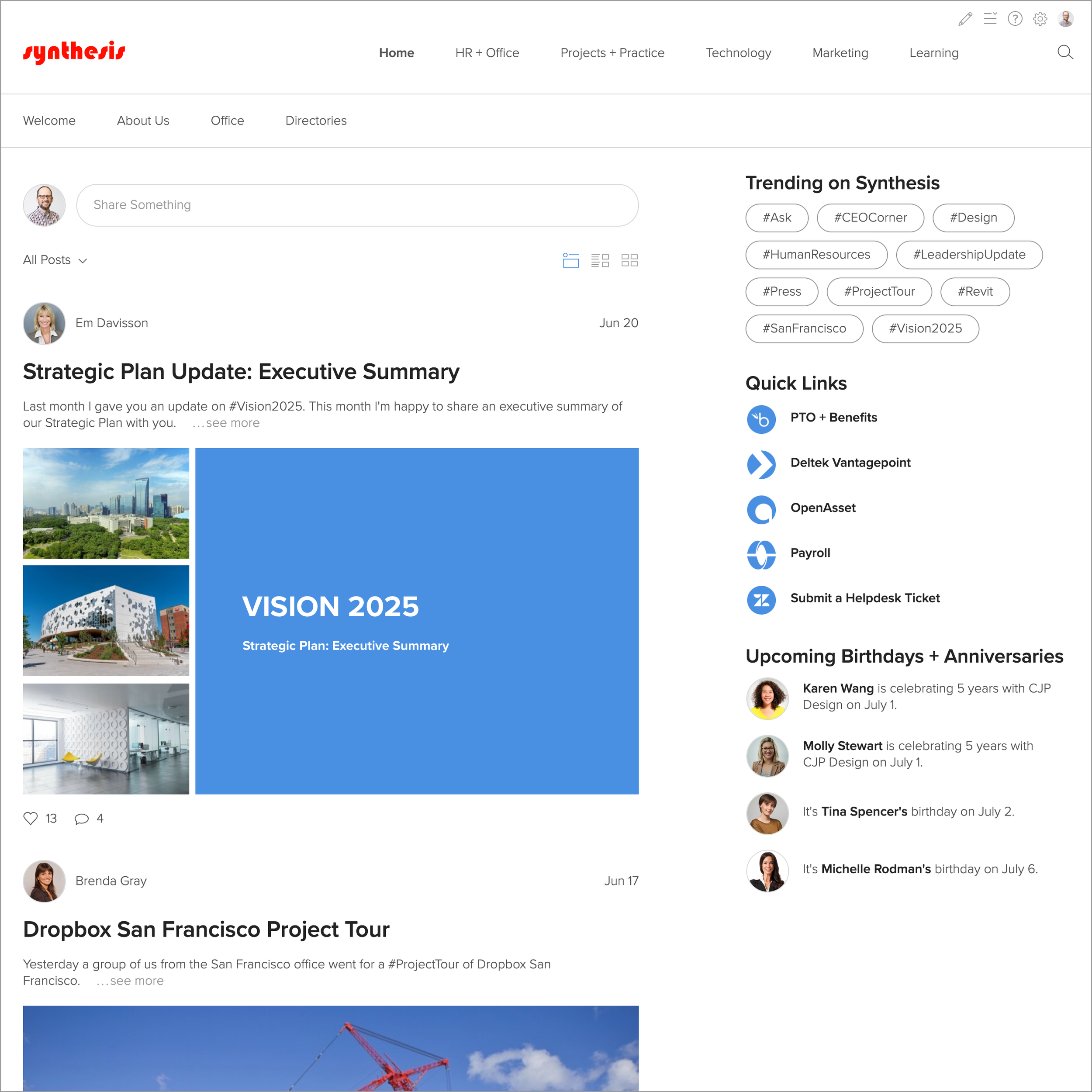
Synthesis Intranet will be your central hub for firmwide knowledge and information, so even if content doesn’t live in Synthesis, your employees will know that they can find links to get what they need.
Introducing Synthesis LMS
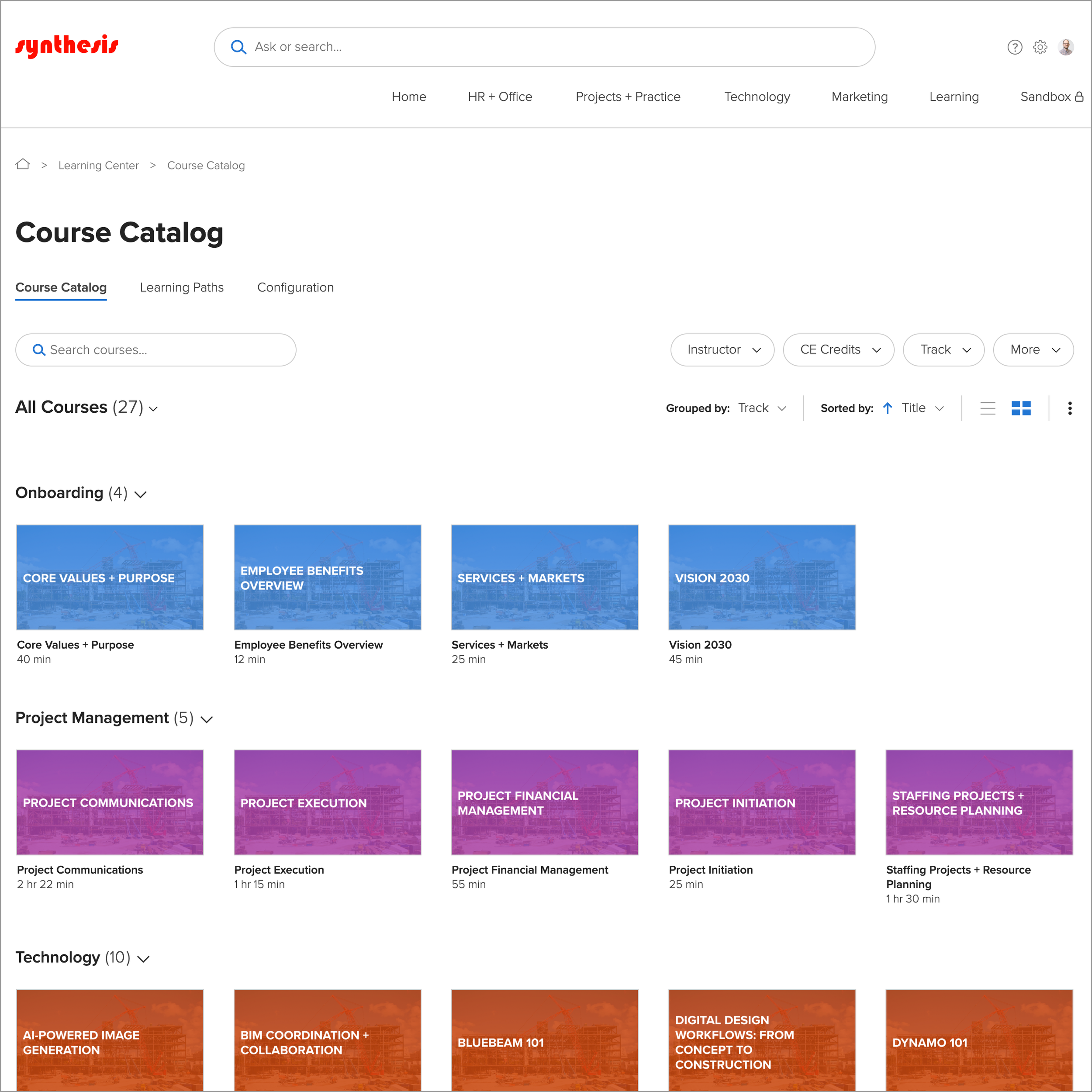
Currently in public beta, Synthesis LMS, our learning management system for AEC firms, brings training, firm knowledge, and AI Search together in one integrated platform—making it easier for employees to learn, grow, and succeed.
The Modern Learning Organization
Modern Learning Organizations accelerate learning and scale expertise by intentionally aligning people, process, technology, and culture to thrive in a rapidly changing environment.
Learn about launching and growing successful intranets from KA Community members.
Featured Guests
Nicole Rogers, Senior Principal and Director of Architecture
Graham Parker, Knowledge Manager
Webinar Summary
What changed when SMRT Architects & Engineers implemented Synthesis wasn't just the platform. It was the mindset.
After four intranet iterations spanning nearly two decades — from hand-coded HTML to ThoughtFarmer to SharePoint — SMRT, a 130-person integrated architecture and engineering firm based in Portland, Maine, made a different kind of commitment. They decided that internal work is real work, that their firm is a worthy client, and then treated their Synthesis implementation accordingly.
Nicole Rogers served not just as executive sponsor, but as principal in charge. Graham Parker, who had already proven the ROI of data-driven process improvement on the accounting side of the business, moved into a dedicated knowledge management role. A project number was created in Deltek. Hours were tracked on timesheets. The implementation got the same rigor and attention SMRT gives its external clients and the results showed.
That investment didn't end at go-live. Nicole has continued to drive adoption at the senior leadership level because SMRT understands that launching Synthesis is just the beginning, not the finish line. Meanwhile, Graham has expanded his work into AI, helping build the digital knowledge foundation that makes tools like Synthesis Knowledge Agents and AI Search valuable.
Knowledge management can't be the ninth thing on somebody's to-do list in the AI era. SMRT's story is a case study in what happens when it isn't.
In this webinar, Nicole Rogers, Senior Principal and Director of Architecture, and Graham Parker, Knowledge Manager, share their firm's story — from the organizational shifts that unlocked knowledge management to a live look at where they're headed with AI and learning management.
We explore:
How treating the Synthesis implementation like a real client project changed the outcome
The change management and internal marketing work that drove adoption before, during, and after launch
How Nicole's continued executive sponsorship keeps the platform alive and growing past go-live
How and why Graham moved from the finance team to a dedicated knowledge management role
What it takes to build the digital knowledge foundation that enables AI agents to actually deliver value
A live tour of CALVIN, SMRT's Synthesis platform, and a look at their early work with Synthesis Knowledge Agents and LMS
If your firm has struggled to give its knowledge management program real momentum, SMRT's story offers an honest, hard-won perspective on what it actually takes: the right investments in mindset, people, process, and culture — alongside the right technology.
Enjoy!
Featured Guests
Christopher Parsons, Founder and CEO, Knowledge Architecture
Webinar Summary
Knowledge agents are emerging as one of the most promising applications of AI for AEC firms—helping teams accelerate learning, scale expertise, and streamline workflows.
In this webinar, Christopher Parsons, Founder and CEO of Knowledge Architecture, will provide a live demonstration of Synthesis Knowledge Agents, showing how agents are created, refined, and deployed to solve real business problems.
Along the way, Christopher will share what we're learning from firms participating in the Synthesis Knowledge Agents private beta, highlighting the patterns and strategic insights emerging from early adoption.
We'll explore:
A live demonstration of Synthesis Knowledge Agents, including how to create and refine agents from scratch
Real-world examples spanning informational, creation-based, and process-based use cases
The progression from informational AI assistants to workflow-transforming knowledge agents
The common characteristics shared by firms making the fastest progress with knowledge agents
How firms are capturing and structuring knowledge to power more capable agents
Where knowledge agents are headed and what that means for AEC firms
This session offers a practical look at how knowledge agents are evolving and what early adopters are teaching us about the future of AI-enabled work in AEC firms.
Enjoy!
Featured Guests
Kristina Williams, Design Technology Director at Lionakis
Brandon Norton, Senior Multi-Media Manager at Fuscoe Engineering
Webinar Summary
As AEC firms rethink how knowledge and expertise are shared internally, learning is beginning to move beyond traditional training formats. Instead of relying solely on live sessions or long recordings, firms are increasingly designing learning experiences that are shorter, more flexible, on-demand or hybrid, and accessible in the flow of work.
This shift is being accelerated in the Knowledge Architecture community by Synthesis, a platform built for Modern Learning Organizations, that combines intranet knowledge, learning management systems, AI-powered search, and knowledge agents to enable employees to discover and apply expertise exactly when they need it.
In this webinar, Kristina Williams, Director of Design Technology at Lionakis, and Brandon Norton, Senior Multi-Media Manager at Fuscoe Engineering, shared how their firms are designing modern learning experiences that take advantage of this new paradigm.
Each presented a case study of a high-priority learning experience their firm is building or modernizing—experiences designed not only for formal learning, but also to support self-directed exploration, knowledge reuse, recall, and AI-powered discovery through Synthesis.
We explored:
How firms are identifying high-value opportunities to modernize learning experiences
How learning content is being structured for both human learning and AI-powered retrieval
How on-demand courses and hybrid learning experiences are designed to support self-directed learning
What early feedback firms are receiving from staff using these new formats
Lessons learned from the first generation of modern learning experiments
What these efforts may mean for the future of knowledge management, learning, and firmwide expertise development
Each speaker shared a 20-minute case study, followed by discussion and open Q&A.
This session offered a practical look at how firms are beginning to redesign learning experiences for a new era—one where knowledge, learning, AI search, and knowledge agents work together to help employees access the right expertise at the right time.
Enjoy!
Jump start your intranet design process with our Design Inspiration Gallery.
Smarter by Design Podcast
How Leading AEC Firms Integrate Knowledge Management, Learning & Development, and AI to Build Smarter, More Adaptive Practices
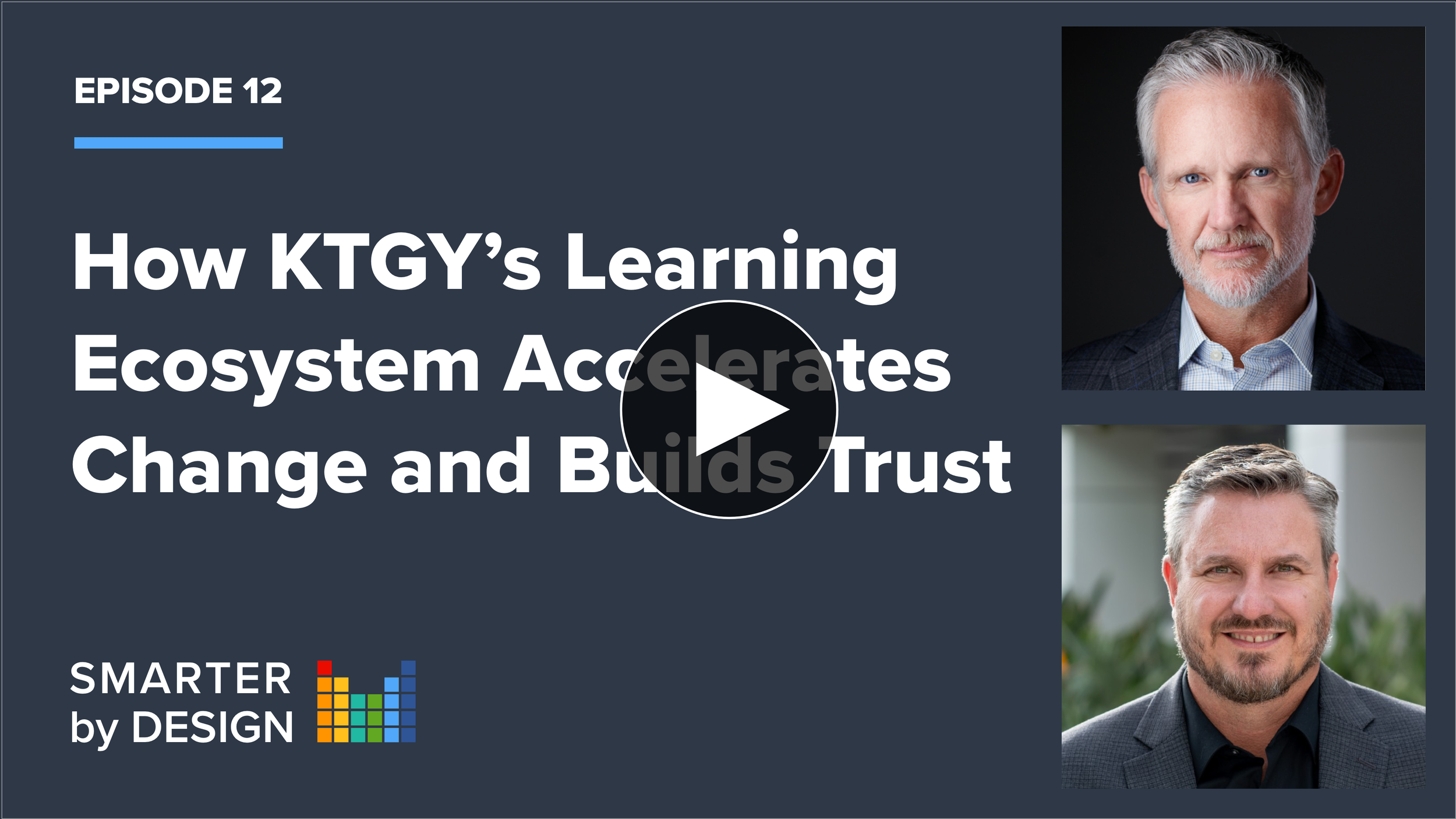
KTGY was founded in 1991 with an ambition to build a firm that would outlast the people who built it. Six founding partners set out to create a firm which would endure from generation to generation — a firm whose culture, values, and capability would compound over time rather than walk out the door when any one person retired. What they couldn’t have anticipated is how deliberately, and how systematically, KTGY would eventually design its way toward that goal.
In this episode of the Smarter by Design podcast, I’m joined by John Robison, Chief Operating Officer at KTGY, and Donovan Helminiak, Director of Knowledge Management, to trace the evolution of KTGY's learning ecosystem and examine how it has become one of the firm's most consequential strategic investments.
The conversation goes behind the scenes of how KTGY built four key components of its learning ecosystem:
ELEVATE Leadership — a year-long, cohort-based program built to teach emerging leaders what great leadership looks like at KTGY
ELEVATE Essentials — a foundational knowledge program which grew from a pandemic-era intern series into a hybrid on-demand and workshop model open to the entire firm
ELEVATE Talent Management — a newer program targeting first-time people managers, focused on the day-to-day nuance of leading teams
FUEL — a grassroots mentorship community driven entirely by emerging professionals, deliberately mixing offices and experience levels to build connections that wouldn't otherwise exist across seven offices
The old apprenticeship model — learning one project at a time from the people around you — served KTGY well for decades, but is no longer sufficient for a firm with over 400 employees, seven offices, a generation of retiring principals, and a profession being radically reshaped by technology.
KTGY's answer has been to design something more intentional: a learning ecosystem where cohort-based programs, on-demand curricula, and grassroots community reinforce each other, and where building trust is a primary goal.
As we discussed in the episode, trust is the catalyst that determines how fast AEC firms can change and evolve. To move faster, means intentionally investing in building trust and KTGY’s learning ecosystem has proven remarkably effective at doing exactly that.
If you lead an AEC firm thinking seriously about what it takes to build a culture that connects distributed teams, and stays ahead of change, and endures across generations, this episode is an honest accounting of what that investment (and the returns) look like.
▶ Watch or Listen
Watch or listen to this episode via YouTube, Spotify, Apple Podcasts or wherever you get your podcasts.
📺 🎧 YouTube
📺 🎧 Spotify
📺 🎧 Apple Podcasts
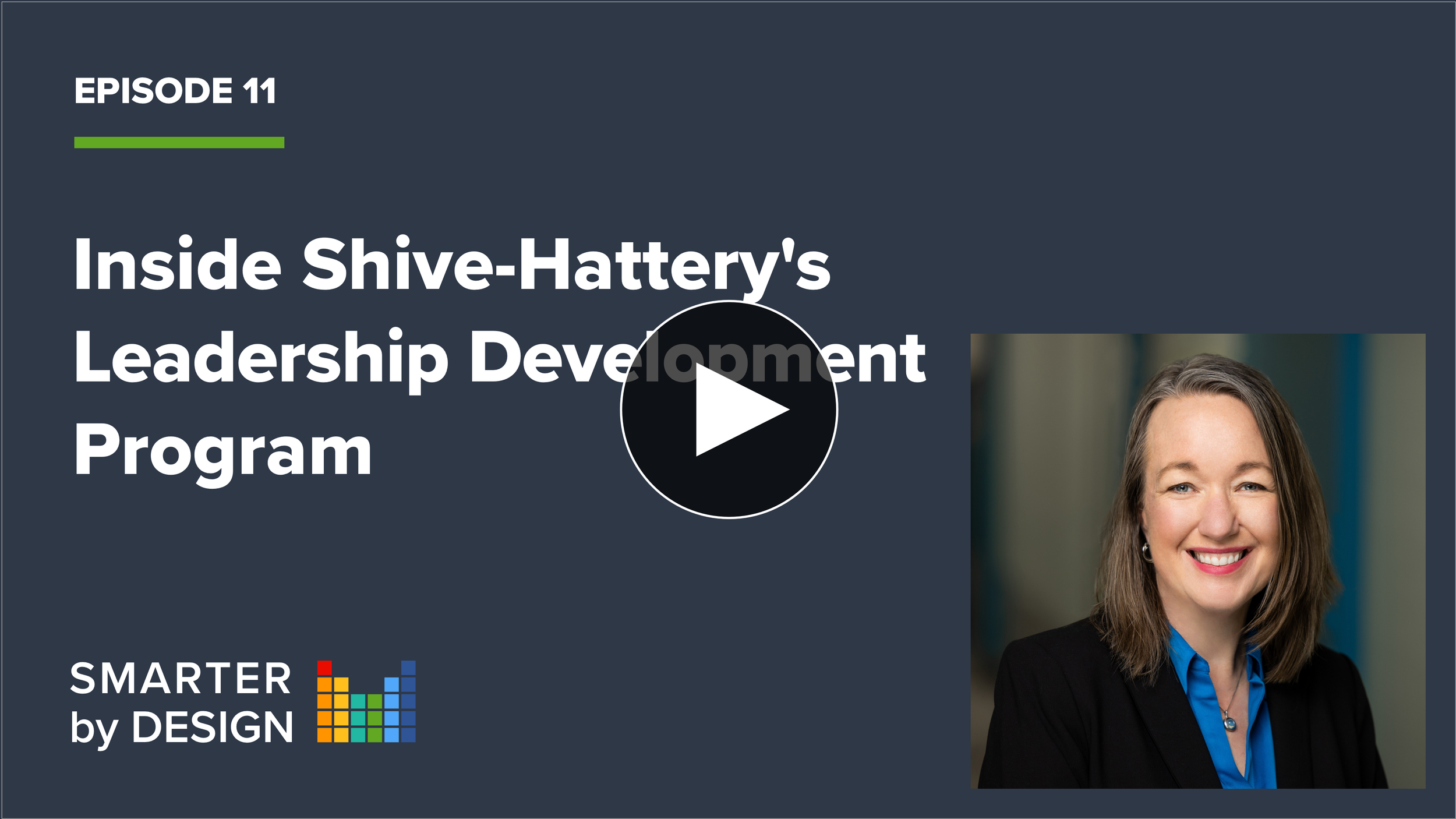
Jennifer Bennett didn't think she had what it took to be a leader. As a structural engineer coming up at Shive-Hattery, she assumed leadership required a natural charisma she didn't have. In 2007 she was invited to participate in the firm's Leadership Development Program and changed her mind. Today she's President and CEO of the 750-person, 18-office architecture and engineering firm, and she runs the program herself.
In this episode of the Smarter by Design podcast, Jennifer takes us inside how Shive-Hattery’s Leadership Development Program actually works: the cohort structure, the Socratic teaching method, the five curriculum pillars (business acumen, negotiation, high-performance teams, culture and values, emotional and social competence), and the real strategic projects each cohort tackles over their 15-18 months together. She also shares how she builds the trust a cohort needs to succeed and how the program itself is evolving as she brings her executive team in to teach modules so the firm can double how many future leaders it reaches each year.
At its core, Shive-Hattery’s Leadership Development Program isn't just about developing individual leaders — it's about teaching people to lead change in a way that's consistent with Shive-Hattery's culture and to carry that culture forward as they rise. That's part of a bigger act of stewardship. Shive-Hattery is a firm with more than 125 years of history and Jennifer sees investing in future leaders as central to how the firm sustains, evolves, and grows for decades to come. Past leaders invested in her generation; now it's her generation’s turn to pay forward.
If you lead an AEC firm or are thinking about what it takes to build a leadership culture and an enduring firm, this episode is for you.
▶ Watch or Listen
Watch or listen to this episode via YouTube, Spotify, Apple Podcasts or wherever you get your podcasts.
📺 🎧 YouTube
📺 🎧 Spotify
📺 🎧 Apple Podcasts
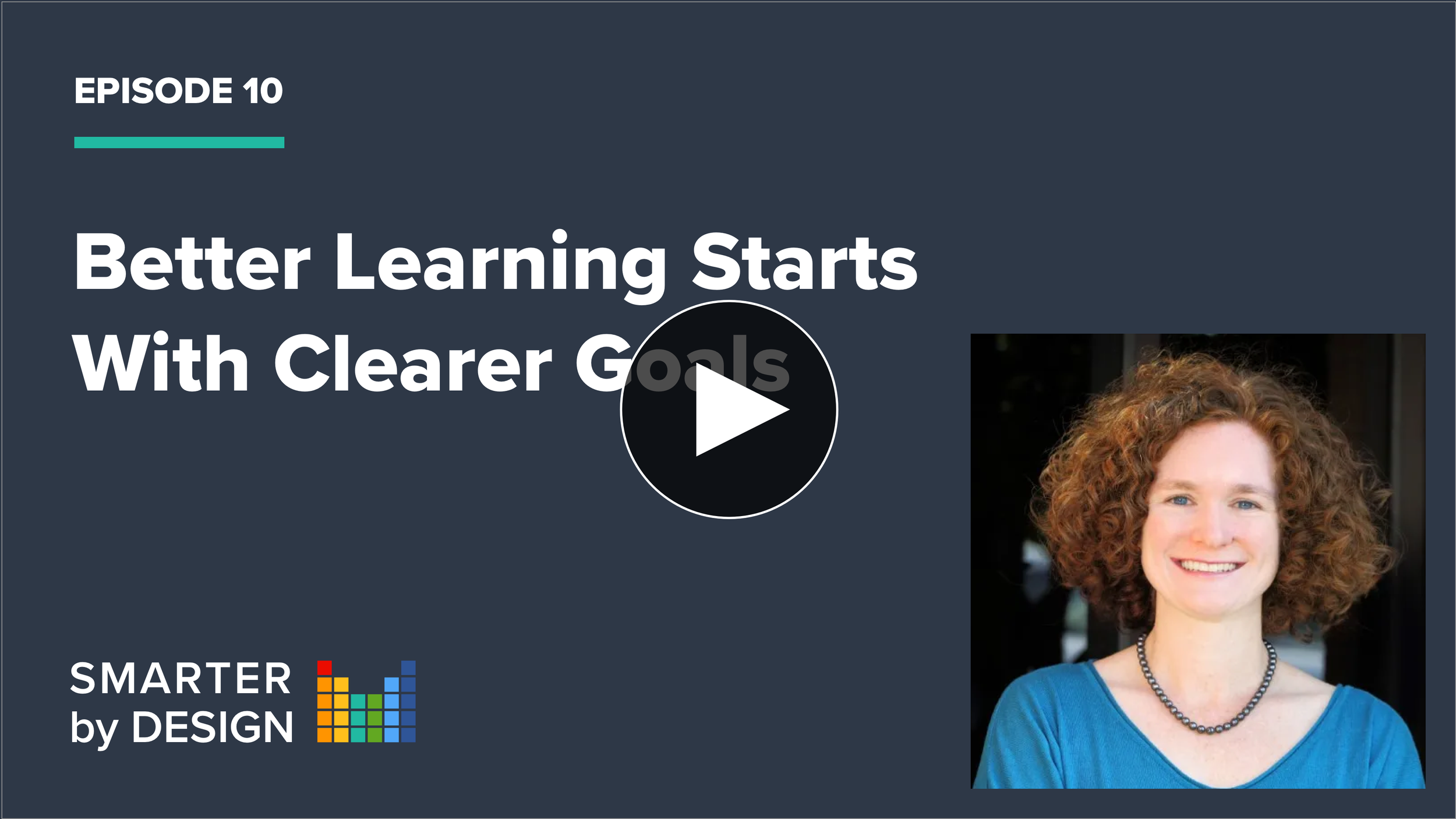
In this episode of the Smarter by Design podcast, I’m joined by Jackie Baxley, Principal and Practice Leader for Environmental Health, Safety, and Sustainability at HRP Associates. Jackie has spent years helping HRP evolve from a more organic, apprenticeship-driven learning culture into a more intentional learning organization that thinks carefully about competency, capability, incentives, mentorship, and organizational performance. Her perspective is shaped by the realities of consulting work, where the product is ultimately the people themselves.
One of the central ideas Jackie returns to throughout this conversation is that not every learning experience is trying to accomplish the same thing. Organizations often get into trouble when they fail to define the actual goal upfront. Is the goal simply communication? Awareness? Skills development? Demonstrated competency? Different goals require different approaches, different investments, and different ways of evaluating success.
Jackie walks through the practical frameworks HRP uses to think more intentionally about learning design, including her “inverted pyramid” model of communication, awareness, training, and competency, as well as the EDGE framework: Educate, Demonstrate, Guide, and Evaluate. We explore why awareness is not the same thing as competency, why repetition matters, how HRP approaches skills validation and quality audits, and why some learning experiences work best asynchronously while others must remain in person.
The conversation also explores the operational and economic realities of learning inside consulting firms. Jackie discusses how HRP has worked to remove the stigma around training and development by redesigning incentives, rethinking billability, and treating learning as a strategic investment rather than overhead. We also discuss HRP’s evolving employee lifecycle programs, their growing focus on soft skills and management development, and the challenge of building deeper organizational capability without turning learning into bureaucracy.
If you lead an AEC firm, manage teams, oversee operations, or are thinking about how to scale expertise more intentionally inside your organization, this episode offers a thoughtful and highly practical conversation about designing learning around real outcomes. A conversation about clearer goals, stronger capability development, and building modern learning organizations that keep getting smarter, by design.
▶ Watch or Listen
Watch or listen to this episode via YouTube, Spotify, Apple Podcasts or wherever you get your podcasts.
📺 🎧 YouTube
📺 🎧 Spotify
📺 🎧 Apple Podcasts
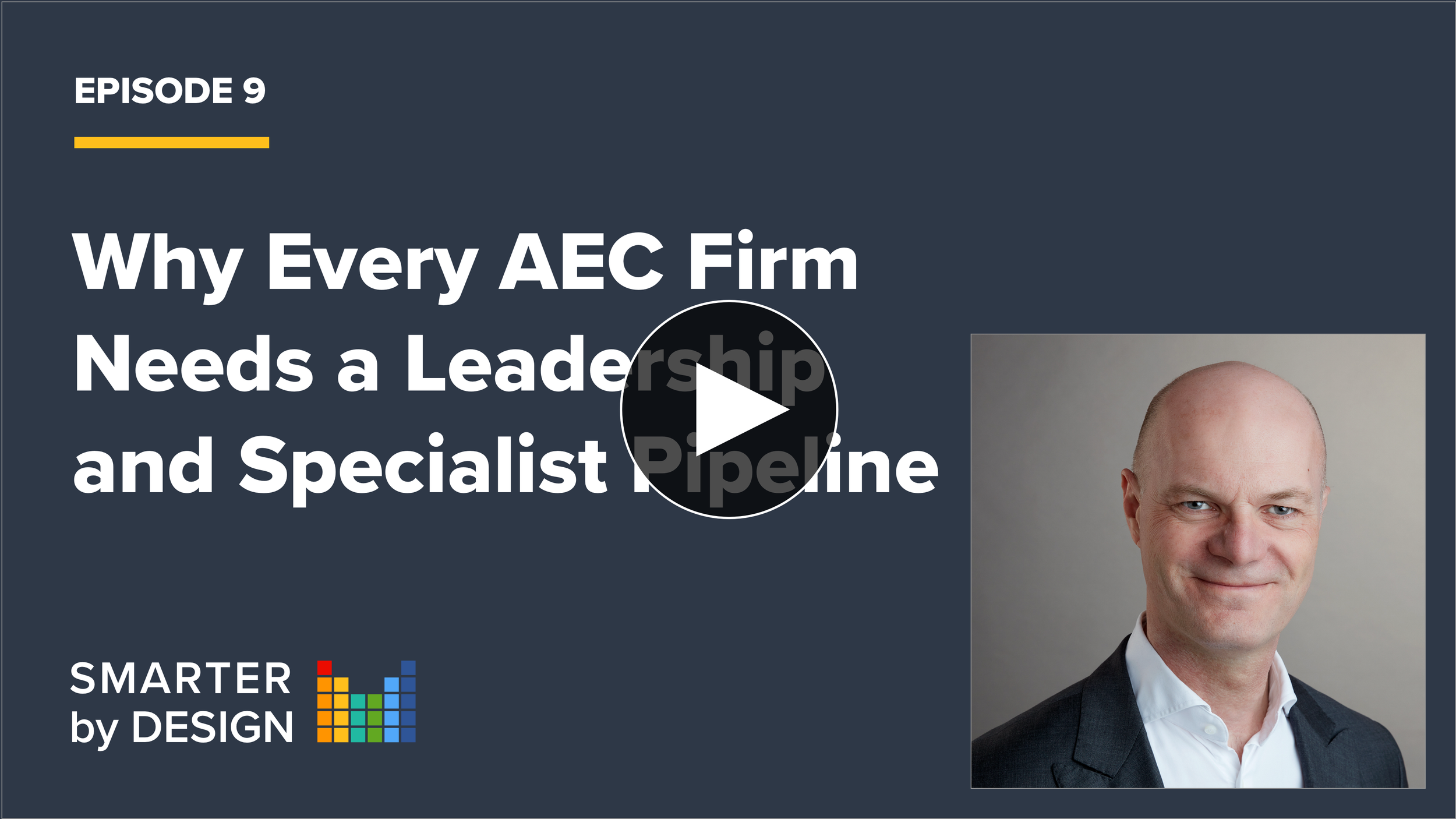
In this episode of the Smarter by Design podcast, I’m joined by Kent Jonasen, CEO of the Leadership Pipeline Institute and co-author of the third edition of The Leadership Pipeline as well as author of The Specialist Pipeline. Kent has spent decades helping organizations rethink leadership development, succession planning, and the challenge of scaling expertise inside complex companies.
His work starts from a deceptively simple premise: leadership is not leadership.
Each transition—from leading yourself to leading others, leading leaders, leading functions, and eventually leading an enterprise—is fundamentally a different job that requires different skills, different priorities, and even different values.
But this conversation goes far beyond leadership development.
Many organizations unintentionally build systems where leadership becomes the only visible path for growth, recognition, and advancement. Specialists—deep technical experts, practitioners, strategists, and problem-solvers—often feel forced toward management roles simply to continue progressing in their careers. Over time, this creates frustration, weak leadership transitions, and the gradual loss of highly valuable expertise.
Kent and I explore why organizations need both leadership pipelines and specialist pipelines working together. We discuss:
Why leadership transitions so often fail
The hidden importance of discovering and aligning with your “work values” in career progression
Why many specialists feel alienated inside traditional organizations
The difference between knowledge experts and knowledge leaders
How companies accidentally push people into management roles they never truly wanted
Why specialist career paths need more than just new titles
How dual leadership and specialist pipelines create healthier long-term organizational design
Along the way, we connect these ideas directly to architecture, engineering, and construction firms, where specialized expertise is often the core engine of competitive advantage. From healthcare planners to sustainability experts to technical design specialists, many AEC firms are wrestling with how to scale expertise, accelerate development, and reduce dependency on a shrinking number of senior experts.
If you lead an AEC firm, oversee learning and development, manage technical teams, or are thinking about succession planning and long-term capability building, this episode offers a powerful framework for rethinking how careers evolve inside organizations. More importantly, it raises a deeper question: what if building a stronger company starts not just with developing better leaders, but with designing better systems for developing expertise itself?
▶ Watch or Listen
Watch or listen to this episode via YouTube, Spotify, Apple Podcasts or wherever you get your podcasts.
📺 🎧 YouTube
📺 🎧 Spotify
📺 🎧 Apple Podcasts
In this episode of the Smarter by Design podcast, I'm joined by Angela Watson, President and CEO of Shepley Bulfinch, a nationally recognized architecture firm whose work spans healthcare, higher education, and civic design. Angela leads with a conviction she traces back to her time teaching at MIT: that real learning doesn't happen through lecture — it happens through doing, through struggle, and through the kind of exploration that only comes when people are given room to fail safely and try again. That belief didn't stay in the classroom. It became the foundation for how she thinks about leading a firm.
Learning by doing is the foundation of how AEC professionals and firms develop. The problem is that great ideas stay trapped in pockets — one team figures something out, another team struggles with the same thing, and the knowledge never travels. Angela saw that dynamic playing out at Shepley Bulfinch as the firm grew into a national practice, work-sharing across five offices with project cycles too long and feedback loops too slow to rely on informal transfer alone. Becoming a learning organization became an operational necessity, but it turned out to be much harder than it looked.
The conversation traces the full arc of what that effort has looked like in practice and what Angela has learned leading it. Why it's so hard for subject matter experts to codify and teach what they know. Why the traditional apprenticeship model is breaking down as plates get fuller and mentorship gets crowded out. What Shepley Bulfinch learned from building Birdfeeder, their internal peer-to-peer learning platform — what worked, what was too ambitious, and what the firm is rethinking now. And why the harder problem isn't building a course catalog — it's connecting learning to where someone actually wants to go in their career.
The thread running underneath all of it is psychological safety. Angela talks about "Back to the Future," Shepley Bulfinch's reframe on lessons learned — a format designed to celebrate the imperfect and make it safe to share what went wrong. She reflects on what it took for her, as CEO, to model that vulnerability publicly, and why she believes culture is the soil in which any learning organization either takes root or doesn't.
If you lead an AEC firm, manage a team, or are thinking seriously about how your organization develops its people, this episode is for you. Angela offers deep insight into what's worked, what hasn't, and what is still to be figured out on Shepley Bulfinch's journey to becoming a learning organization.
▶ Watch or Listen
Watch or listen to this episode via YouTube, Spotify, Apple Podcasts or wherever you get your podcasts.
📺 🎧 YouTube
📺 🎧 Spotify
🎧 Apple Podcasts
In this episode of the Smarter by Design podcast, I’m joined by Clark Quinn, a cognitive scientist who has spent his career translating decades of learning research into practical guidance for organizations. He is the founder of Quinnovation and co-founder of the L&D Accelerator. His work is grounded in a simple conviction: most organizations are leaving enormous potential on the table — not for lack of effort or care, but because the science of how people actually learn has rarely made it into the room where learning decisions get made.
In most AEC firms, learning and development didn’t start with a formal strategy. It emerged organically. Executives responsible for talent came up through practice. L&D leaders stepped into their roles because they wanted to make their firms better, not because they were trained in the discipline. Subject matter experts shared what they know without ever having been taught how to teach.
As a result, most learning organizations in the AEC industry were largely built by accident rather than by design. And in that gap lies a significant opportunity: to create learning that doesn’t just inform, but actually improves capability and performance.
That is what this conversation is about.
Clark walks us through the science that most accidental L&D leaders never had access to. He explains why training so often stops at information transfer, what it really takes to design for performance rather than content delivery, and what the research says about learning design that actually moves the needle. We explore the shift from content-heavy training to practice-led learning, how to identify the root causes behind critical performance gaps before reaching for a training solution, and how to determine whether learning is even the right intervention.
We also step back and look at what a true learning ecosystem requires: not just courses, but performance support, job aids, communities of practice, mentoring, and the cultural conditions where learning compounds over time. Where knowledge is shared openly. Where failure is discussed. And where leadership sets the tone.
Finally, we go deep on one of the most important dynamics in any AEC firm: how to effectively work with busy and highly billable subject matter experts by drawing out what they know, pairing them with skilled learning designers, and building a coaching culture that makes expertise transferable at scale.
If you lead an AEC firm, build learning programs, or teach others what you know—and you’ve largely been figuring it out as you go—this conversation offers a foundation for doing it smarter. By design.
▶ Watch or Listen
Watch or listen to this episode via YouTube, Spotify, Apple Podcasts or wherever you get your podcasts.
📺 🎧 YouTube
📺 🎧 Spotify
🎧 Apple Podcasts
Smarter by Design Newsletter
How Leading AEC Firms Manage Information, Share Knowledge, and Build Learning Organizations
I spoke at AEC Innovate last month about Synthesis Knowledge Agents and walked through several examples of what AEC firms in our beta program are beginning to build.
In the presentation I showed a contract and NDA review agent that could evaluate an agreement against a firm’s own standards and accumulated judgment. I showed a fee proposal agent grounded in how a firm approaches pricing and scope. I talked about proposal assistants that could draw not only on project information and boilerplate, but also on a firm’s own guidance for writing strong project descriptions and approach statements.
The agents were doing different jobs, but they had something important in common: they were all powered by their firms capturing some version of “this is what good looks like” from their experts.
After my talk, the CEO of one of our prospective clients came up to me and said he loved what I shared. The agents I showed seemed powerful and genuinely useful, and he could immediately imagine a whole collection of them his firm might want to build.
But there was one part he could not quite get past. Was he supposed to sit down alone and write all of those best practices from scratch? Were the people on his leadership team supposed to somehow find the time to document everything they knew before the firm could build useful knowledge agents?
The whole thing suddenly felt daunting and I saw his shoulders had slumped.
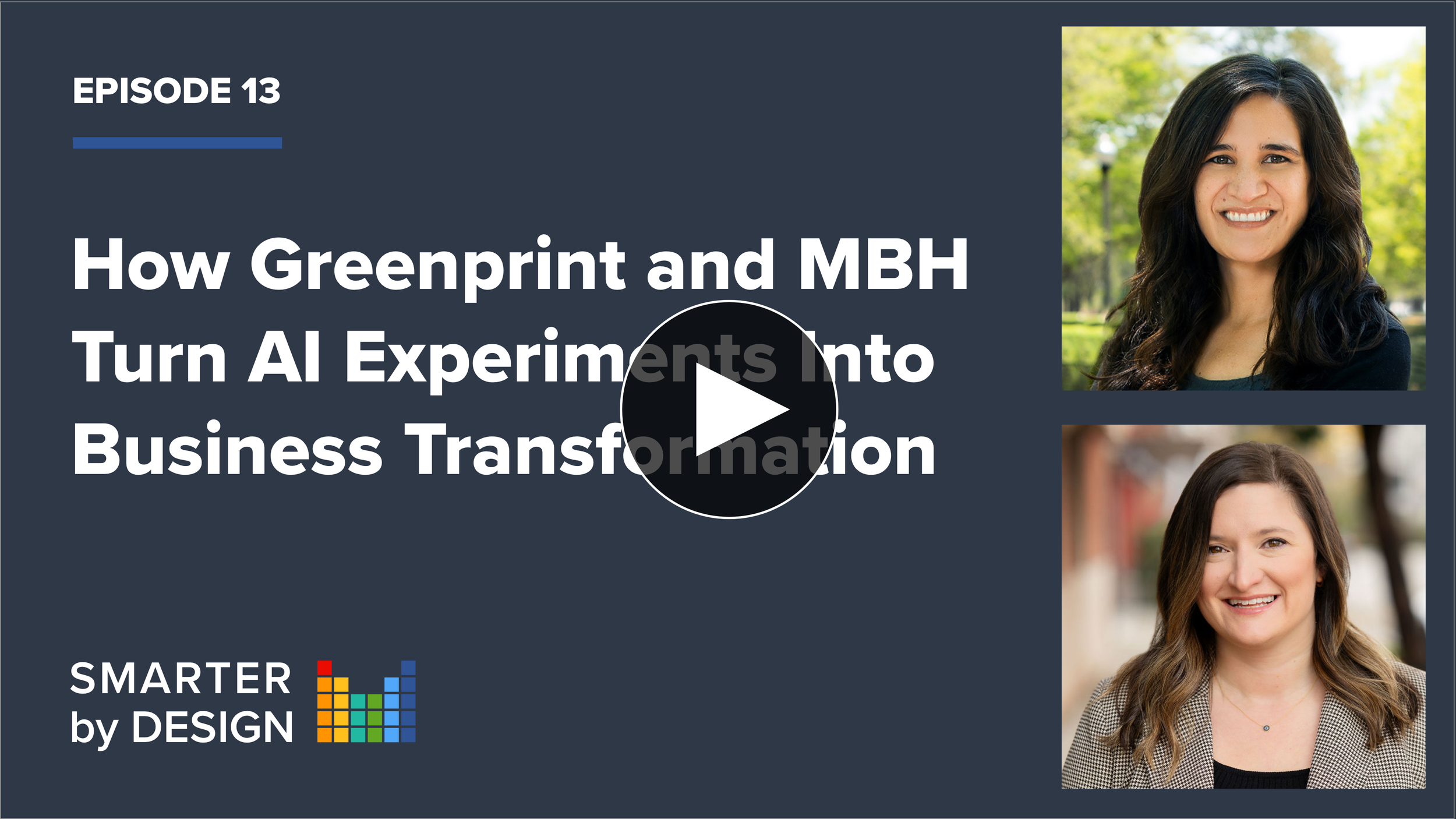
Seeing his reaction, I shared the behind-the-scenes story of how MBH Architects created their NDA review agent.
Before their CFO retired, Ryan McNulty, President at MBH Architects, made sure to get him in a room for a brain dump. Over the course of a few conversations, Ryan and his team walked through how he reviewed contracts, specifically NDAs. Which clauses were always unacceptable. Which ones the firm would negotiate, and under what circumstances. What unusual language tended to appear, and how the firm had learned to respond. Decades of contract judgment, compressed over time into instinct, were suddenly made visible.
They distilled those conversations into a set of NDA best practices. Those best practices now power a contract review agent. Any manager at MBH can upload a new client NDA, and the agent can go clause by clause, identify potential risks, explain its reasoning, and suggest a response based on the firm’s own accumulated judgment.
The CFO had not sat down alone with a blank page and written the definitive guide to reviewing NDAs. Ryan and his team had partnered with him to draw that knowledge out through conversation, examples, questions, and iteration. AI could help accelerate that process even further.
The CEO’s reaction was immediate.
“Oh my gosh. I didn’t even think I could use AI that way. It's so obvious now that you are saying it.”
Between the people on his marketing and operations teams, the experts throughout the firm, and AI, he could imagine capturing a great deal of this knowledge much faster than he had assumed.
Building useful knowledge agents no longer felt out of reach. What had changed wasn’t the technology, it was his mental model for knowledge capture.
He had been imagining an expert alone with a blank page.
But there’s a better way.
Before their CFO retired, Ryan McNulty, President at MBH Architects, made sure to get him in a room for a brain dump.
Over the course of a few conversations, Ryan and his team walked him through how he reviews contracts, specifically NDAs. Which clauses were always unacceptable. Which ones the firm would negotiate, and under what circumstances. What language a client should be expected to provide. What unusual clauses tend to appear, and how the firm has learned to respond. Decades of contract judgment, compressed over time into instinct, were suddenly made visible.
They distilled those conversations into a set of NDA best practices. Those best practices now power a contract review agent. Any manager at MBH can upload a new client NDA, and the agent goes clause by clause, marking each one high, medium, or low risk, explaining the rating, and suggesting a response. Expertise that once lived in one person’s head is now available to everyone in the firm, consistently, at any hour.
The technology mattered, of course. But it was not the only thing that made this possible.
What made the agent valuable was the judgment behind it. Someone had to understand that NDA review was important enough to improve. Someone had to know which expertise mattered. Someone had to help extract that expertise from the head of an experienced leader and turn it into guidance an agent could actually use. Someone had to see that this was more than an interesting AI experiment. It was a chance to take a recurring business process and make the firm’s best thinking more available, consistent, and scalable.
As we have been working with AEC firms in the Synthesis Knowledge Agent private beta, I have found myself coming back to a simple observation: the firms getting the most traction are having their firm leaders build agents themselves.
That distinction matters because high-impact knowledge agents are not created from AI enthusiasm alone. They are created when people who run AEC firms begin to personally and viscerally understand how agents can improve work that matters.
Over the past year, I've had countless conversations about AI agents across the AEC industry — with clients, partners, peers, and practitioners at every level.
I keep noticing we're using the same word to describe wildly different systems.
Sometimes "agent" means an informational chatbot that can answer questions using firm knowledge. Sometimes it means a workflow assistant that helps generate proposals. Sometimes it means a system executing repeatable business processes with minimal human input. And sometimes it means fully autonomous systems coordinating multiple specialized agents across an entire operation.
That ambiguity matters. The way a firm should approach an informational agent is fundamentally different from how it would approach a fully autonomous system operating across multiple workflows. The technical requirements are different. The governance requirements are different. The trust, risk, and organizational implications are different. And yet most conversations about AI agents flatten all of this into a single category.
Autonomous vehicle companies solved a similar problem. Rather than debating whether a car was "autonomous" or not, they introduced a spectrum of capability levels — a shared language for discussing current capabilities, where they were headed, and what human oversight was still required along the way.
That framing inspired me. So I started sketching something similar for AEC: not a single definition of "agent," but a spectrum of increasingly capable systems — each with different strengths, risks, requirements, and use cases.
I've been calling it the Agent Capability Spectrum.
All AEC firms are learning organizations.
They have to be. From the moment a new firm takes on its first project, it begins a process of continuous learning. Learning how to deliver work, how to collaborate across disciplines, how to listen to clients, how to navigate permitting authorities, and how to translate ideas into drawings and built form. With each successive project that learning deepens and expands, shaped by new challenges, new contexts, and new people.
As firms grow, so does the scope of what they must learn. They learn how to recruit and onboard talent, how to develop people into capable and confident contributors, how to expand into new markets and take on unfamiliar project types, how to adopt and integrate new technologies, and how to navigate the broader cycles of the industry—periods of rapid growth as well as moments of contraction and uncertainty. Over time, many firms also learn how to transition leadership across generations, preserving what matters while adapting to what’s next.
In this sense, if a firm has endured—if it has grown, evolved, and remained relevant over time—it has done so by learning, continuously, and across every part of the organization.
And yet, while learning is ever-present, it is not always intentionally designed.
In many firms, learning emerges organically from the work itself. It is embedded in projects, carried through conversations, shaped by mentorship, and accumulated through experience. It is often rich and valuable, but also uneven—varying from team to team, from project to project, and from one moment in time to the next. It is deeply human, but not always structured in a way that allows the firm to scale with consistency.
For a long time, this has been sufficient. In fact, it has been the foundation of how the AEC industry has developed expertise for generations.
But the context in which firms operate is changing. The pace of work is accelerating. The complexity of projects is increasing while the timelines and budgets are shrinking. The demands on teams are growing as experienced professionals are stretched across more responsibilities, and we’re asking emerging professionals to take on more advanced tasks earlier in their careers than ever before. At the same time, new technologies, particularly those related to AI, are beginning to reshape how knowledge can be captured, accessed, and applied.
In this environment, the difference between firms is no longer simply what they know. It is how effectively they are able to learn, adapt, and apply that knowledge over time.
Over the past year, working closely with firms adopting Synthesis LMS and AI-powered search, I’ve started to notice a shift. The organizations that seem to be gaining the most traction are not just implementing new tools; they are becoming more intentional about how learning happens within their firms. They are stepping back and beginning to redesign the organization itself—how knowledge is created, how it is shared, how people develop skills, and how all of that connects to the work they do every day.
I’ve come to think of this shift as a movement from what we might call a traditional learning organization to a modern learning organization—one that is not defined by any single program or platform, but by a more deliberate and integrated approach to building and sustaining collective intelligence.
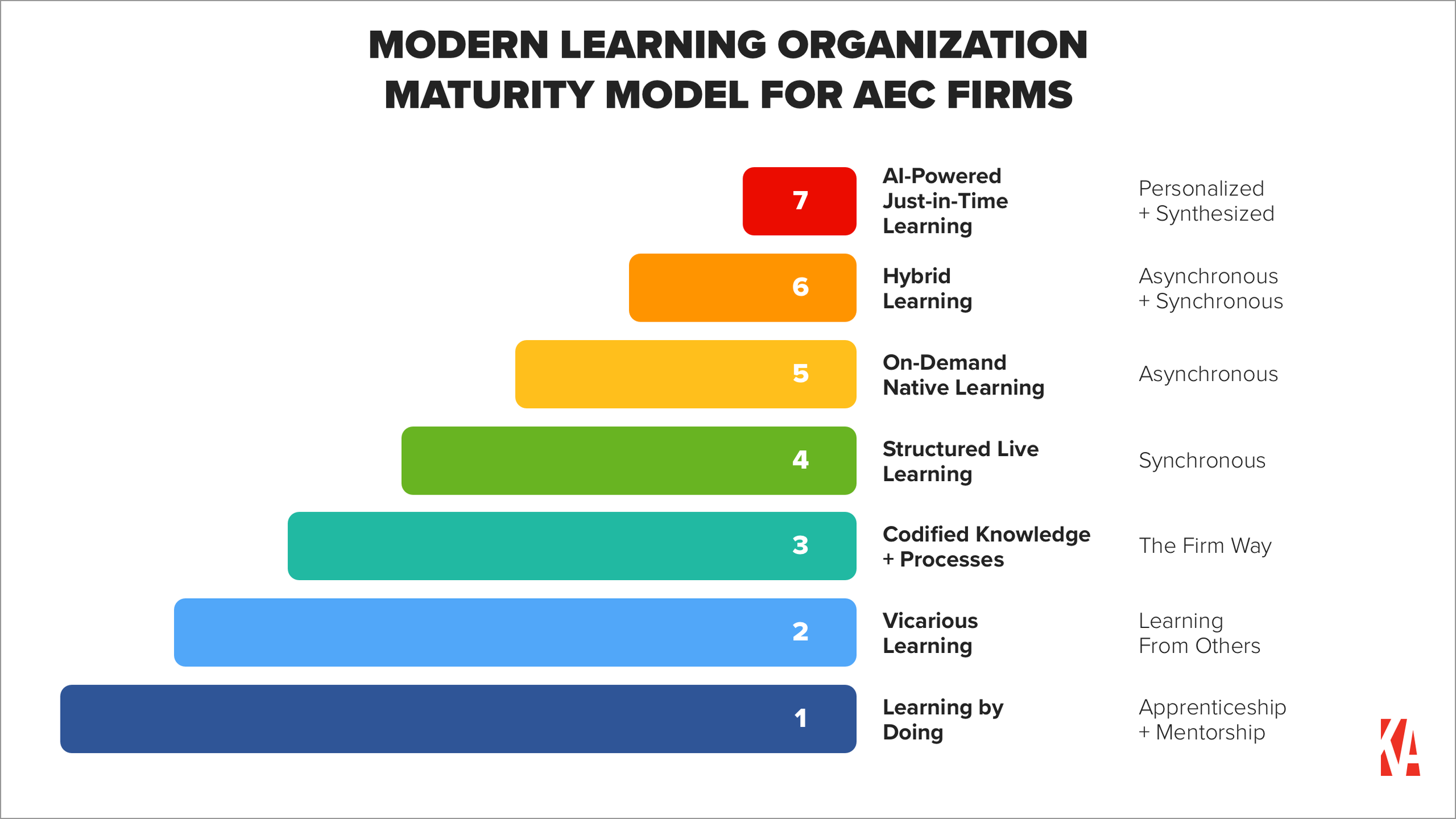
To better understand this change, I created a maturity model—one that reflects how learning capabilities tend to develop over time within AEC firms. This model begins with the foundational ways people learn through experience and interaction, and extends through more structured, scalable, and technology-enabled approaches, culminating in the emerging potential of AI-powered, just-in-time learning in the flow of work.
In the sections that follow, I’ll walk through that progression as a seven-level maturity model for AEC firms. Along the way, we’ll explore what each level looks like in practice, where it creates value, where it begins to show its limits, and how firms move from one stage to the next. We’ll also look at what fundamentally changes as organizations become more intentional in how they learn—and why the ability to learn well may become one of the defining characteristics of the most successful firms in the years ahead.
Here we go.
In the last issue of Smarter by Design, I introduced the Modern Learning Organization Pipeline — a practical, end-to-end model for turning learning opportunities into durable capability inside AEC firms. The nine steps of the pipeline move through identifying and prioritizing learning needs, designing and delivering learning experiences, unlocking just-in-time retrieval, and ultimately to measurement and continuous improvement.
At a strategic level, the logic of the pipeline is straightforward. If firms systematically capture expertise, distribute it intelligently, and reinforce it in the flow of work, they become more capable, more resilient, and less dependent on any single individual.
But models on paper are the easy part.
The road to the Modern Learning Organization runs directly through subject matter experts — through their willingness and ability to share what they know — and through the organization’s ability to help transfer and scale that knowledge.
And this is where things get interesting.
If you ask a senior architect or engineer to document what they know, record a short course, or capture best practices from a recent project, what objection would you expect to hear?
For most people, it’s the same answer. “I don’t have time.” Or, closely related, “I’m too busy.”
Picture an iceberg. The visible portion above the waterline is what gets said out loud. “I don’t have time.” “I’m too busy.”
Those are socially acceptable objections. They are real, and they matter. But they are rarely the whole story.
Beneath the waterline sit quieter forces of the iceberg— unspoken barriers to keeping experts from sharing knowledge which revolve around identity, legitimacy, confidence, cultural norms, maintenance, and trust. Questions about whether sharing knowledge will actually improve the quality of someone’s workday. Questions about whether the effort will have an impact. Questions about whether they are truly the right person to step forward. Questions about whether the system will support them or simply ask them to do more.
If we respond only to the spoken barriers of “I don’t have time” or “I’m too busy” we miss a major opportunity to overcome more deeply-seated emotional barriers to knowledge sharing.
Over the past 25 years working in knowledge management in AEC — and through countless conversations with subject matter experts, knowledge and learning leaders, CEOs, and project teams — I’ve come to see a pattern. The resistance to sharing expertise is rarely about time. It is almost always about something deeper and more emotional.
In this article, I surface seven of those unspoken barriers. More importantly, I explore what leading firms are doing to address them — through culture, partnership, process, and modern learning infrastructure.
I believe learning and development in AEC is going to change more in the next five years than it has in the last twenty-five.
Outside of work, people have grown accustomed to immediate, searchable, personalized access to information. That experience is reshaping what they expect from learning and knowledge inside their firms.
Many AEC professionals now expect knowledge and learning to be accessible exactly when they need it, in the flow of their work, rather than scheduled far in advance. And they would like to be able to find answers to their questions on demand, without having to attend hour-long, day-long, or week-long training delivered in linear formats. That shift is being shaped by generational change, the increased pace of work, and the growing availability of on-demand and AI-enabled tools.
For the first time, AEC firms have a real opportunity to deliver the right knowledge and learning to the right person at the right time. Technology is a major part of that story—including recent advances in AI and video capture, editing, and transcription—but it’s not the whole story. The real shift will come from how firms bring together people, process, technology, and culture to support learning as a core organizational capability.
That kind of change doesn’t happen organically. It happens by design.
I believe the firms that take full advantage of this moment will be the ones that intentionally evolve into what I’ve been calling Modern Learning Organizations.
In simple terms, a Modern Learning Organization does three things:
Builds and maintains collective intelligence
Leverages technology to deliver knowledge in the flow of work
Continuously adapts and thrives in a rapidly changing environment
This issue of Smarter by Design is the first in a multipart series exploring what it means to design a Modern Learning Organization in the AEC industry.
In this issue, I’ll introduce the Modern Learning Organization Pipeline—a practical, end-to-end model for turning learning opportunities into real, durable organizational capability. The pipeline reflects my nearly 25 years of knowledge management work in AEC, insights from the Knowledge Architecture community, and lessons emerging from firms in the Synthesis LMS public beta actively experimenting with new learning approaches.
Some parts of this model reflect practices that have always mattered: thoughtful prioritization, intentional design, and continuous improvement. Other parts reflect what has changed dramatically—especially the ability to unlock just-in-time, dynamically assembled learning that meets people where work actually happens.
My goal with this model isn’t to prescribe a single “right” way forward for all AEC firms. It’s to offer a shared framework you can react to, adapt, and refine as you think about how learning really works inside your firm—and how it could work better.
Here we go.
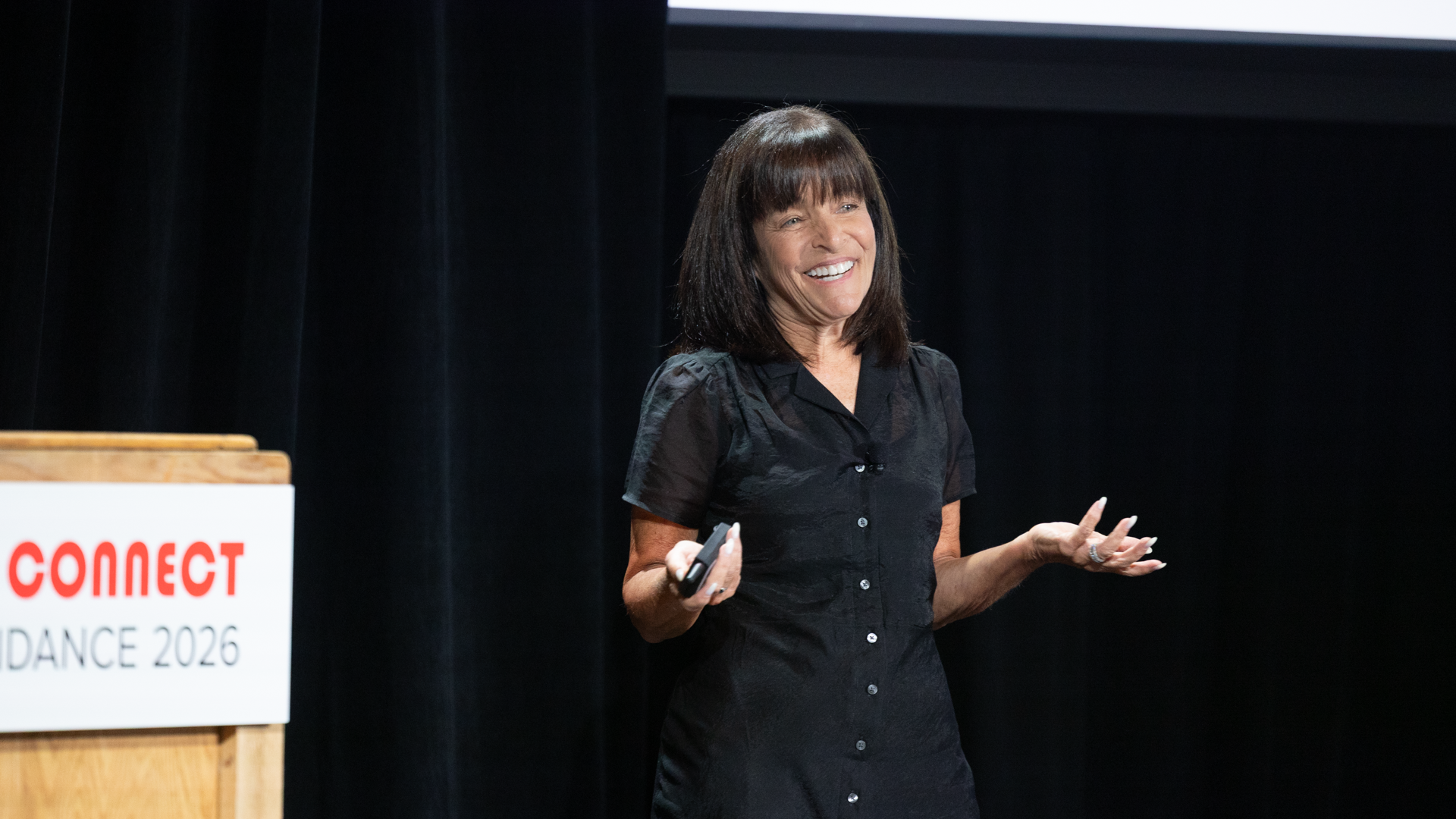
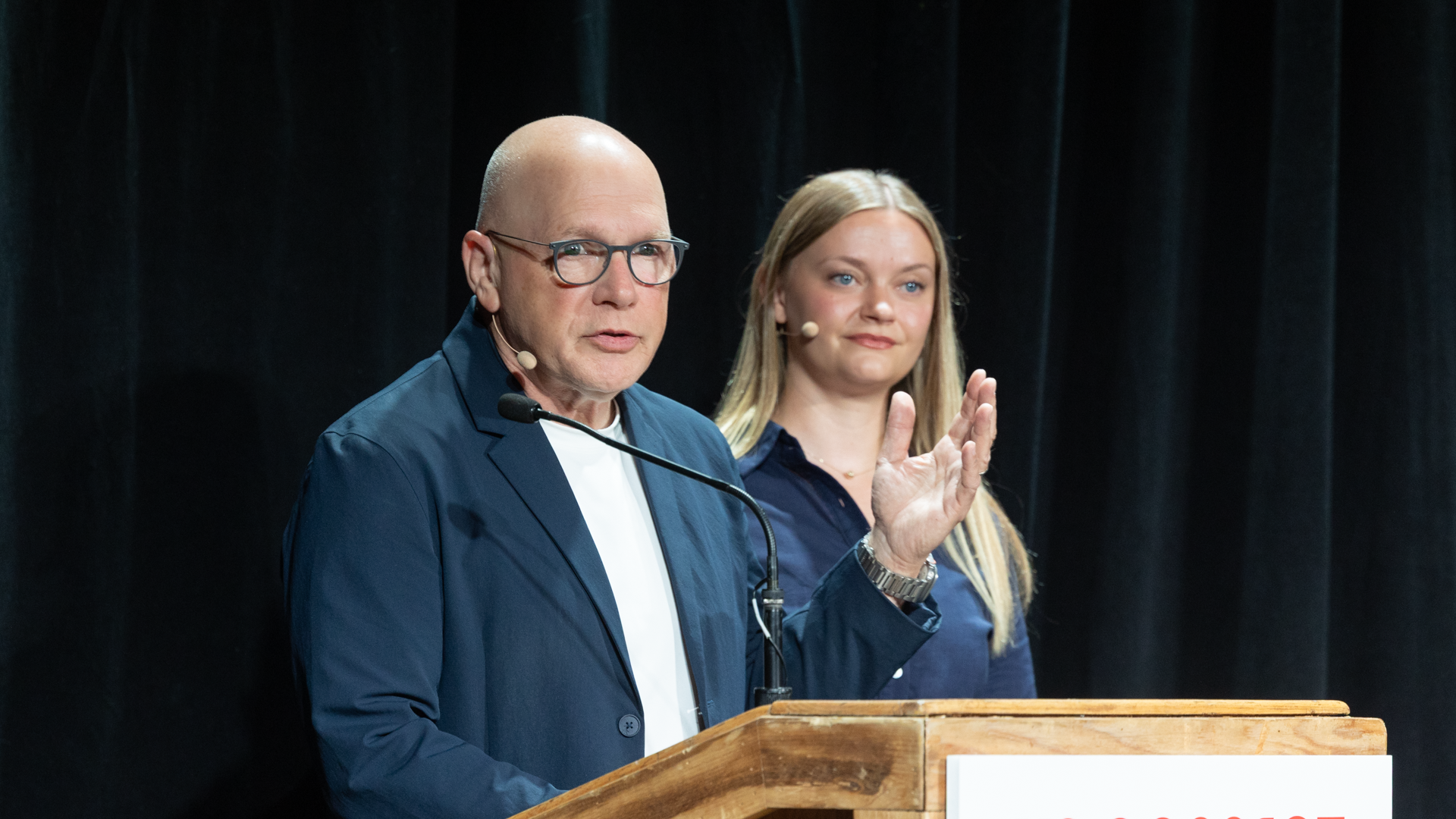
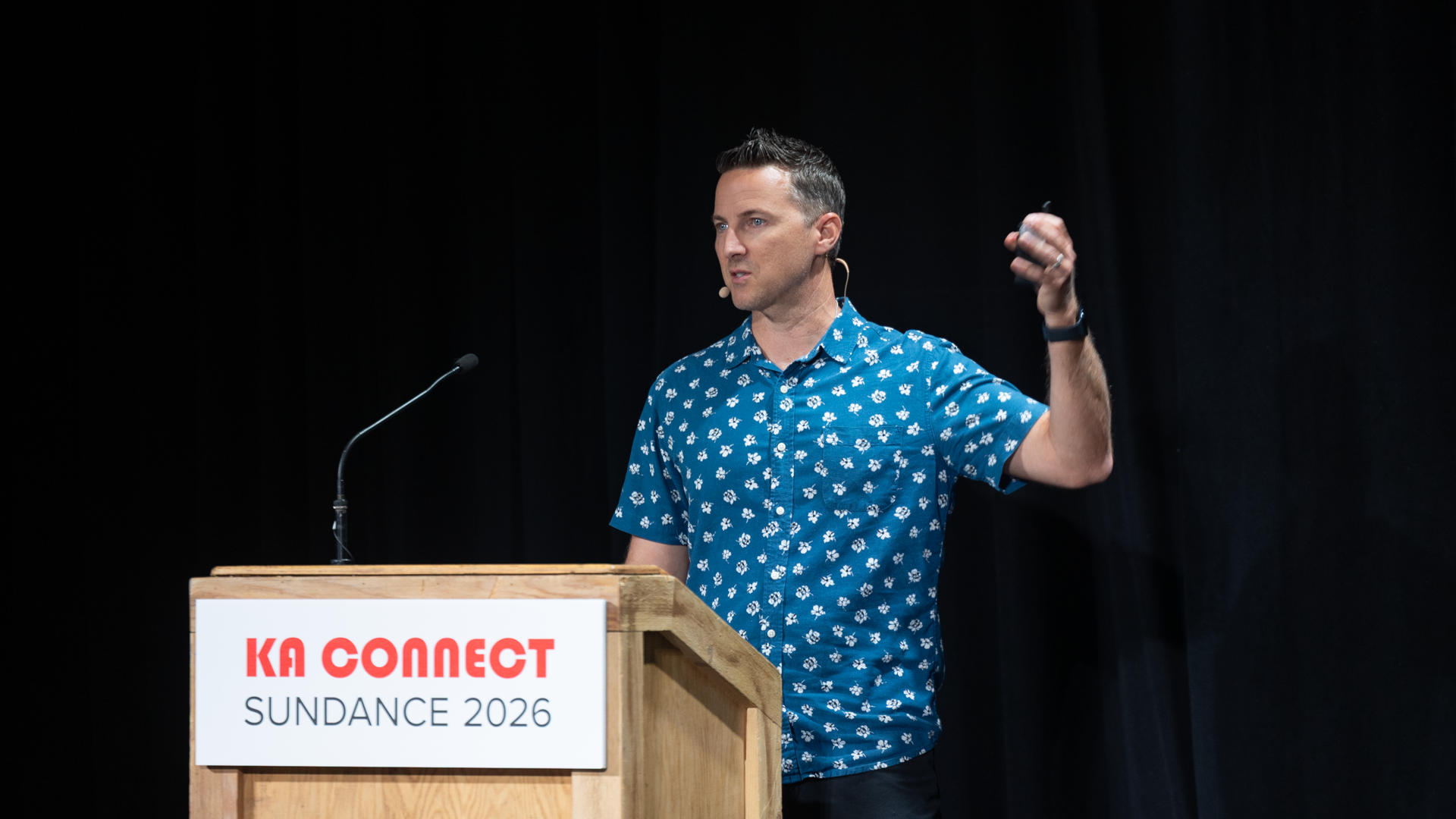
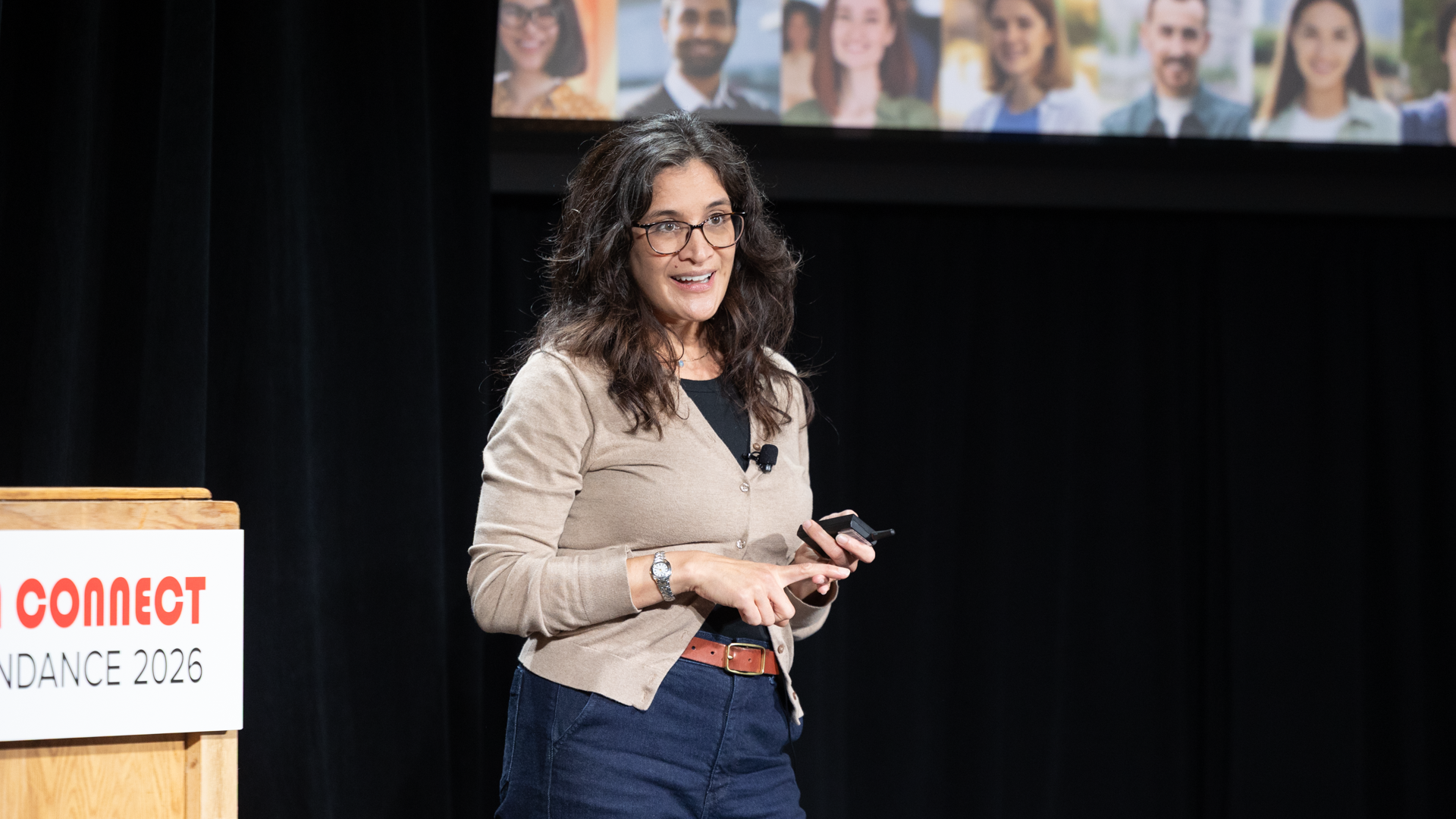
KA Connect 2026 | Sundance
Designing Modern Learning Organizations
KA Connect 2026, our annual knowledge and learning management conference for the AEC industry, will take place at the Sundance Mountain Resort in Sundance, Utah from August 11th to August 14th, 2026.
We’ll explore what it means to design a modern learning organization—one that blends knowledge management, learning and development, and artificial intelligence into a more integrated and intentional approach to capability building.
We’re just at the beginning of this journey. The technology is evolving rapidly and best practices are beginning to emerge. By coming together as a community — sharing experiments, surfacing insights, and challenging assumptions — we can get smarter faster, together.